
Last Updated: June 2026
This Dog Sofa Bed Size Guide is based on common sleeping behaviors, breed differences, and orthopedic comfort requirements.
The best way to choose a dog sofa bed size is to measure your dog while sleeping naturally, then add extra space based on sleeping style. Most dogs are more comfortable on slightly larger orthopedic sofa beds because they allow better stretching, pressure relief, and long-term support. Large breeds, senior dogs, and sprawlers almost always benefit from sizing up. This Dog Sofa Bed Size Guide is designed to help owners choose the correct sofa bed size based on breed, sleeping style, and orthopedic needs.
After evaluating orthopedic dog sofa beds across small breeds, giant breeds, senior dogs, sprawlers, curlers, and anxious companion dogs, one pattern became extremely obvious: most owners underestimate how much space dogs actually use during deep sleep cycles.
Dogs that appear compact during daytime naps often stretch dramatically farther overnight once fully relaxed.
For breed-specific recommendations, continue with:
- best dog sofa beds for large breeds
- best extra large dog sofa beds
- best dog sofa beds for small dogs
- Best Orthopedic Dog Sofa Beds
- how to choose the perfect pet sofa bed
- complete guide to dog sofa beds
Dog Sofa Bed Size Guide: Why Sizing Matters
Dog bed sizing directly affects orthopedic comfort, sleeping posture, and long-term support quality.
Beds that are too small often force dogs into compressed sleeping positions that increase pressure around hips, elbows, shoulders, and spine alignment. Over time, this can reduce sleep quality and accelerate foam compression. One important lesson from this Dog Sofa Bed Size Guide is that proper sizing often improves comfort more than expensive foam upgrades.
During long-term evaluation, properly sized orthopedic sofa beds consistently improved:
- sleep posture
- pressure distribution
- foam durability
- overnight stretching comfort
- repositioning ease
- senior dog mobility
Interestingly, many owners initially assumed their dogs slept in tightly curled positions all night, only to discover later that deeper overnight sleep cycles involved much more stretching, rolling, and repositioning than expected.
This became especially obvious among:
- Labrador Retrievers
- Golden Retrievers
- German Shepherds
- Huskies
- Greyhounds
- large mixed breeds
A good Dog Sofa Bed Size Guide helps owners avoid sizing mistakes that can reduce comfort, support, and long-term durability.
How to Measure Your Dog Correctly
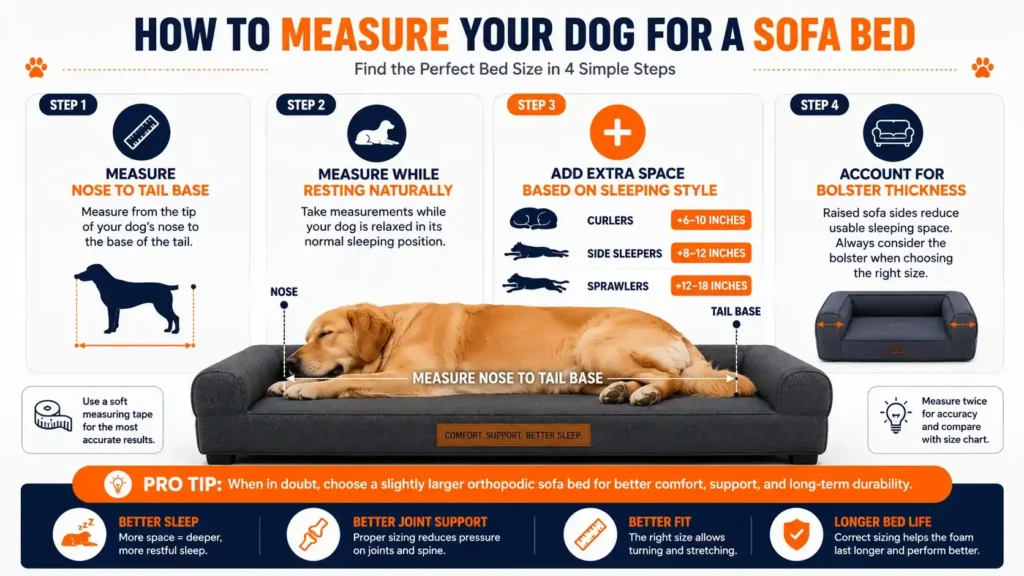
The measurement process outlined in this Dog Sofa Bed Size Guide helps eliminate the guesswork from choosing the right bed size. Many owners accidentally measure dogs while standing instead of sleeping naturally.
Following a Dog Sofa Bed Size Guide ensures your measurements translate into the right bed size for your dog’s sleeping habits.
Step 1: Let Your Dog Relax Naturally
Wait until your dog settles into their normal sleeping position.
Some dogs curl tightly while others fully extend their legs during sleep. Measuring natural sleep posture produces much more accurate sizing results than standing measurements alone.
Step 2: Measure Nose to Tail Base
Using a soft measuring tape:
- measure from nose tip
- continue to tail base
- do not include the tail itself
This creates your minimum usable sleeping length.
Step 3: Add Extra Space Based on Sleep Style
Most dogs need additional room beyond body length.
| Sleep Style | Recommended Extra Space |
| Curled sleepers | 6–10 inches |
| Side sleepers | 8–12 inches |
| Sprawlers | 12–18 inches |
| Giant breeds | Oversized XXL space |
During testing, dogs overwhelmingly preferred beds slightly larger than minimum manufacturer recommendations.
Step 4: Account for Bolster Space
One of the biggest sizing mistakes involves ignoring bolster thickness.
Furniture-style sofa beds reduce usable interior dimensions because raised orthopedic sides occupy part of the sleeping surface.
A bed advertised as 40 inches wide may provide several inches less actual sleeping room once bolster sides are included.
Dog Sofa Bed Size Guide by Breed
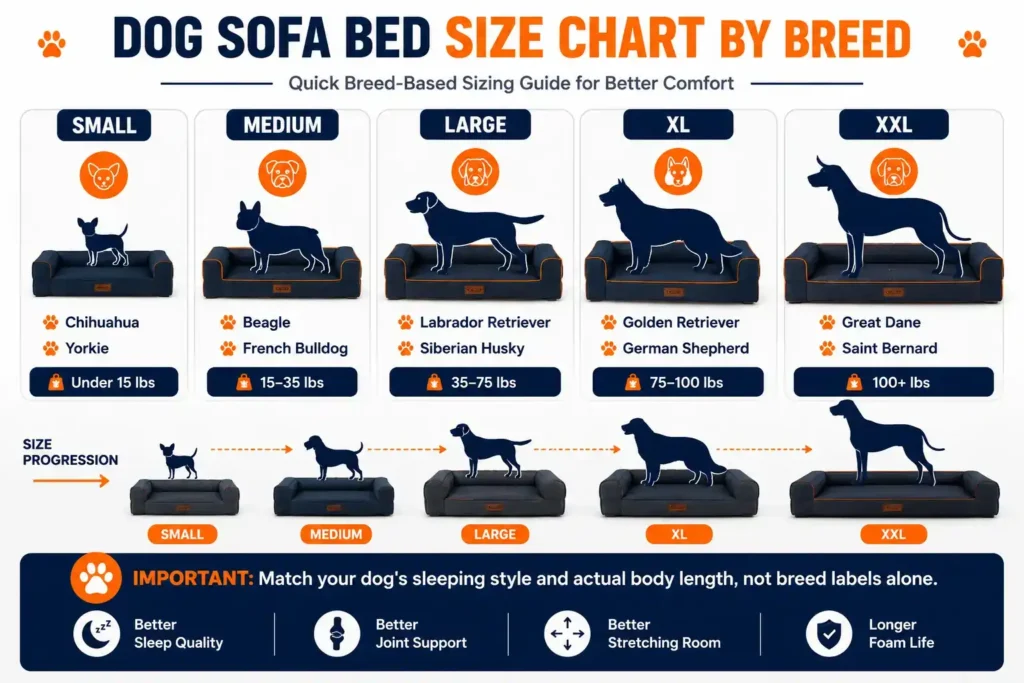
While helpful, breed charts should be used as a starting point rather than the only factor in a Dog Sofa Bed Size Guide. Breed labels alone are not perfect, but they provide useful starting points. The visual comparison below makes this Dog Sofa Bed Size Guide easier to apply when comparing different dog breeds and bed sizes.
| Dog Breed | Recommended Size | Best Bed Type |
| Chihuahua | Small | Bolster sofa |
| Yorkie | Small | Enclosed sofa |
| French Bulldog | Medium | Orthopedic bolster |
| Beagle | Medium | Curled sleeper sofa |
| Border Collie | Large | Supportive orthopedic |
| Labrador Retriever | Large/XL | Oversized orthopedic |
| Golden Retriever | XL | Memory foam sofa |
| German Shepherd | XL | Large bolster bed |
| Great Dane | XXL | Giant orthopedic sofa |
While breed charts are useful, a Dog Sofa Bed Size Guide should always be combined with actual body measurements.
Small vs Medium vs Large vs XL Beds
Dog bed sizing varies significantly between brands. A Dog Sofa Bed Size Guide should always account for sleeping posture in addition to bed dimensions.
A “large” Furhaven sofa may fit differently than a “large” Bedsure orthopedic sofa or Club Nine Pets luxury dog couch. This Dog Sofa Bed Size Guide shows that sleeping style often matters more than breed labels alone.
Small Dog Sofa Beds
Small orthopedic sofas work best for:
- toy breeds
- compact sleepers
- anxious nesting dogs
- curlers preferring enclosed sides
Many small dogs actually prefer slightly enclosed bolster sofas because they reinforce security and warmth.
Medium Dog Sofa Beds
Medium orthopedic beds fit:
- Beagles
- French Bulldogs
- Cocker Spaniels
- smaller mixed breeds
Medium sizes balance nesting comfort with moderate stretching room.
Large & XL Dog Sofa Beds
Large orthopedic sofas work best for:
- Labradors
- Golden Retrievers
- Huskies
- German Shepherds
- Boxers
Large breeds almost always require more space than owners initially expect once dogs fully stretch overnight.
Sprawler vs Curler Sleeping Styles
This section is one of the most important parts of any Dog Sofa Bed Size Guide because sleeping style directly affects space requirements. Sleeping posture changes sizing requirements dramatically. Understanding sleeping posture is one of the most valuable parts of any Dog Sofa Bed Size Guide.
Curlers
Curlers naturally sleep compactly and often prefer:
- bolster sides
- enclosed sleeping space
- moderate sofa sizing
- cozy orthopedic nesting support
Anxious dogs frequently performed better on slightly enclosed bolster beds than oversized open surfaces during testing.
Sprawlers
Sprawlers require substantially larger orthopedic surfaces.
These dogs:
- stretch legs fully outward
- rotate frequently during sleep
- reposition repeatedly overnight
During long-term testing, sprawlers consistently hung off undersized beds even when breed sizing technically matched manufacturer recommendations.
Breeds commonly sprawling include:
- Labradors
- Golden Retrievers
- Greyhounds
- Huskies
- athletic mixed breeds.
How Much Extra Space Should a Dog Have on a Sofa Bed?
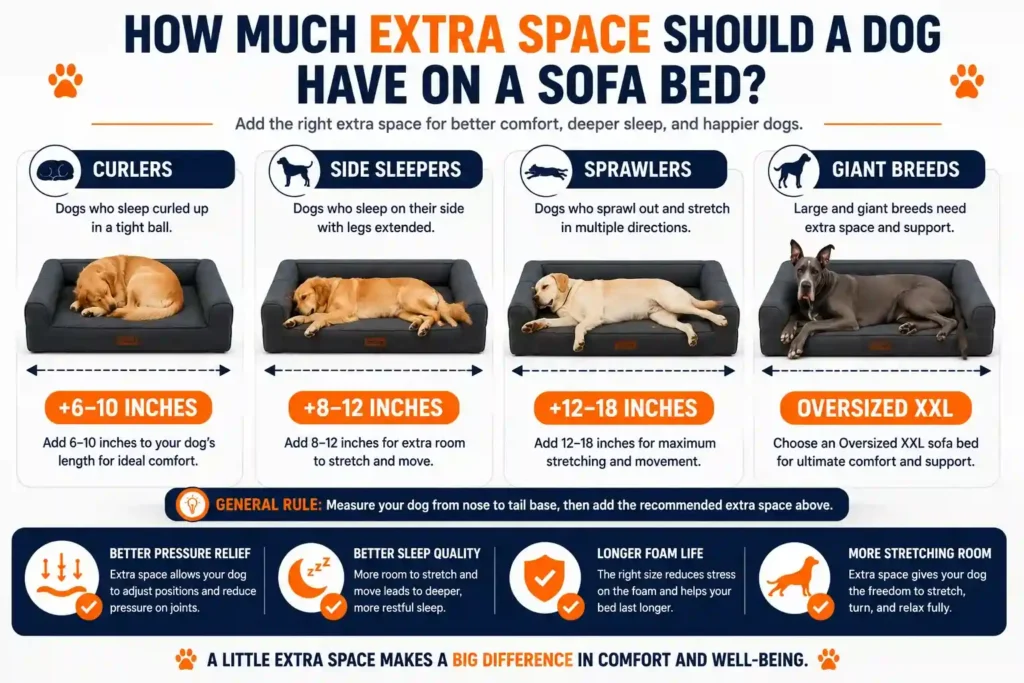
One of the biggest mistakes owners make is choosing a dog sofa bed that only matches their dog’s body length. Most dogs need additional room for stretching, turning, and repositioning during sleep.
A good rule is to measure your dog from nose to tail base while resting naturally, then add extra space based on sleeping style.
| Sleeping Style | Recommended Extra Space |
|---|---|
| Curlers | +6–10 inches |
| Side Sleepers | +8–12 inches |
| Sprawlers | +12–18 inches |
| Giant Breeds | Oversized XXL sizing |
Curlers usually sleep in compact positions and can be comfortable on slightly smaller bolster-style sofas. Side sleepers need additional room for leg extension and comfortable movement.
Sprawlers require the most space because they frequently stretch their legs outward and change positions throughout the night. During evaluation, sprawlers consistently appeared more comfortable on oversized orthopedic sofa beds than on beds that only matched their body length.
Giant breeds such as Great Danes, Saint Bernards, and Mastiffs typically benefit from XXL orthopedic sofa beds that provide broader weight distribution and better long-term foam support.
A complete Dog Sofa Bed Size Guide recommends adding extra room for stretching, repositioning, and long-term comfort.
Should You Size Up for Orthopedic Support?
In many cases, a Dog Sofa Bed Size Guide will recommend sizing up slightly for improved pressure relief and movement comfort.
Slightly oversized orthopedic sofa beds usually improve:
- pressure distribution
- foam longevity
- repositioning comfort
- joint support
- sleep quality
Senior dogs with arthritis, hip dysplasia, mobility stiffness, or canine joint pain especially benefit from additional movement space.
During evaluation, oversized orthopedic beds consistently maintained structural integrity longer than tightly fitted beds under heavier breeds.
However, extremely oversized beds can occasionally reduce security for anxious toy breeds preferring enclosed nesting spaces. One consistent lesson from this Dog Sofa Bed Size Guide is that slightly larger orthopedic beds often provide better support.
Best Sofa Bed Sizes for Puppies
Puppies require slightly different sizing strategies.
Many owners buy oversized adult beds expecting “room to grow,” but extremely large sleeping surfaces sometimes reduce comfort and security during early development.
The best puppy sofa beds usually include:
- moderate growth room
- waterproof liners
- removable washable covers
- lower entry height
- chew-resistant materials
- supportive bolster sides
Using a Dog Sofa Bed Size Guide can help puppy owners avoid replacing beds too frequently as their dog grows. For durability recommendations, continue with:
Common Dog Bed Sizing Mistakes
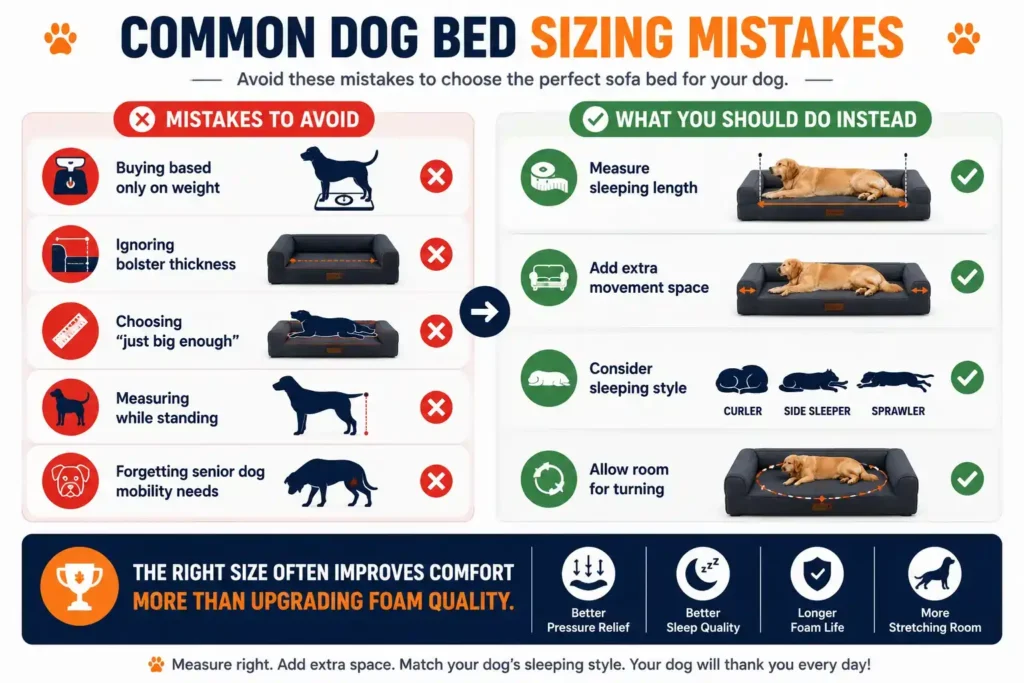
Several sizing mistakes appeared repeatedly during evaluation.
| Mistake | Why It Causes Problems |
| Buying based only on weight | Tall breeds need more length |
| Ignoring bolster thickness | Interior space becomes smaller |
| Buying “just big enough” | Reduces movement comfort |
| Forgetting senior mobility | Older dogs need turning room |
| Using standing measurements only | Sleeping posture is very different |
One of the clearest long-term patterns involved owners underestimating how dramatically dogs changed posture once fully relaxed overnight. Many sizing problems can be prevented simply by following a reliable Dog Sofa Bed Size Guide before purchasing.
Senior Dog Sizing Considerations
Senior dogs usually benefit from slightly oversized orthopedic sofas.
Dogs experiencing:
- arthritis
- spinal stiffness
- hip dysplasia
- mobility limitations
- canine joint pain
…often reposition more slowly during sleep and require broader movement space.
During testing, senior dogs consistently appeared calmer and more relaxed on orthopedic sofas allowing easier turning movement and reduced edge crowding.
Raised bolster sides also helped some aging dogs stabilize themselves during repositioning. For aging pets, a Dog Sofa Bed Size Guide becomes even more important because mobility needs often change over time.
For orthopedic recommendations, see:
Frequently Asked Questions
What size dog sofa bed do I need?
Measure your dog while naturally stretched during sleep, then add additional room depending on sleeping style and orthopedic needs.
Should dogs size up in orthopedic beds?
In many cases, yes. Slightly larger orthopedic beds can improve:
- pressure relief
- movement comfort
- sleeping flexibility
- foam longevity
How do I measure my dog for a sofa bed?
Measure from the tip of the nose to the base of the tail while your dog rests naturally stretched.
Then add extra room to allow comfortable movement and repositioning during sleep.
Are bolster beds smaller inside?
Yes. Raised bolster sides reduce usable sleeping dimensions compared to flat beds.
Always consider the interior sleeping area rather than the overall exterior dimensions.
What size bed is best for Labradors?
Most Labradors perform best on large or XL orthopedic sofa beds because they frequently sprawl during sleep and benefit from additional stretching room.
What size sofa bed works best for Golden Retrievers?
Golden Retrievers usually perform best on XL orthopedic sofa beds with:
- memory foam support
- ample stretching room
- durable construction
- supportive bolster sides
Do puppies need oversized dog beds?
Not necessarily. A moderate amount of growth room usually works better than extremely oversized sleeping surfaces.
Excessively large beds may reduce the cozy feeling many puppies prefer.
What size bed works best for senior dogs?
Senior dogs often benefit from slightly oversized orthopedic sofa beds because they provide:
- extra turning space
- better pressure relief
- easier repositioning
- improved comfort
Should giant breeds use XXL sofa beds?
Yes. Giant breeds often require oversized XXL orthopedic surfaces to distribute weight properly and prevent pressure concentration.
Is it better to size up or size down?
When uncertain, slightly larger orthopedic sofa beds usually perform better long term than tightly fitted beds.
Extra space often improves comfort, movement freedom, and overall sleeping quality.
Final Verdict: Dog Sofa Bed Size Guide
Choosing the correct dog sofa bed size has a major impact on comfort, support, and long-term durability. The most accurate approach is measuring your dog while sleeping naturally and selecting a bed that provides enough room for stretching, turning, and repositioning.
In most cases, slightly larger orthopedic sofa beds perform better than tightly fitted beds, especially for senior dogs, large breeds, and dogs that sprawl during sleep.
When in doubt, focus on your dog’s sleeping style rather than breed labels alone. A properly sized sofa bed can improve sleep quality, pressure relief, and overall comfort for years to come. Overall, this Dog Sofa Bed Size Guide provides a practical framework for choosing a bed that supports comfort, sleep quality, and long-term joint health.
Expert Recommendation
“Proper dog bed sizing plays a major role in orthopedic comfort, especially for senior dogs and large breeds. Slightly oversized orthopedic beds usually provide better pressure distribution and sleeping posture long term.”
— Dr. Michael Reynolds, DVM
About the Author
Emily Carter has spent more than 6 years researching orthopedic pet furniture, canine sleep ergonomics, breed-specific comfort design, and long-term dog bed durability.
Her work focuses on evaluating orthopedic support quality, sleeping behavior patterns, pressure relief systems, and real-world usability across modern dog sofa bed categories.
This article was medically reviewed by Dr. Michael Reynolds, DVM, who specializes in canine mobility, orthopedic support, senior dog comfort, and long-term pet wellness.