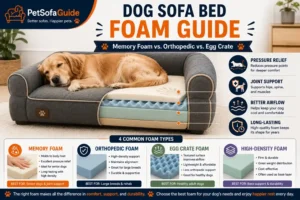
This Senior Dog Bed Guide explains how orthopedic support, memory foam, pressure relief, and low-entry sofa beds can dramatically improve comfort, mobility, and sleep quality for older dogs. As this Senior Dog Bed Guide shows, senior dogs spend more time resting, recover more slowly from physical activity, and often begin struggling with joint stiffness, arthritis, hip dysplasia, spinal pressure, mobility loss, and discomfort getting in and out of traditional pet beds.
A high-quality memory foam bed with supportive bolster sides, low-entry access, and pressure-relieving support can reduce joint pain, improve sleep quality, and help senior dogs move more comfortably every day.
After evaluating orthopedic dog sofa beds, memory foam support systems, elevated senior pet loungers, low-entry orthopedic couches, and real-world aging-dog sleeping behavior across multiple breeds, one thing became consistently obvious: the right orthopedic bed can significantly improve comfort, mobility, sleep quality, and overall daily relaxation.
Many owners initially assume slowing down is simply “normal aging,” only to realize later that proper orthopedic support dramatically changes how comfortably their dog rests, recovers, and moves throughout the day.
If you’ve ever wondered:
- What is the best bed for a senior dog?
- Do orthopedic beds help older dogs?
- Is memory foam good for senior dogs?
- What features matter most for arthritic dogs?
- How do I choose a bed for hip dysplasia or joint pain?
This Senior Dog Bed Guide explains why orthopedic support matters and how to choose the right senior dog sofa bed for long-term comfort. Throughout this Senior Dog Bed Guide, you’ll also learn which features provide the greatest benefits for aging dogs and how to avoid common buying mistakes.
For additional buying and care guidance, also explore our:
- best orthopedic dog sofa beds
- is memory foam good for dogs
- complete guide to dog sofa beds
- dog sofa bed size guide
- Best Dog Sofa Beds for Large Breeds
Senior Dog Bed Guide: Why Senior Dogs Need Different Beds
This Senior Dog Bed Guide begins with one important fact: older dogs need more support than younger dogs. As dogs age, joint flexibility decreases, muscles weaken, and conditions like arthritis and hip dysplasia become more common.
During our evaluation for this Senior Dog Bed Guide, senior dogs resting on flattened or low-quality beds frequently repositioned themselves because of poor pressure relief. Many owners believed their dogs were simply slowing down with age but noticed better sleep, easier movement, and greater comfort after switching to a supportive orthopedic bed.
One clear pattern emerged: high-density orthopedic foam reduced pressure on the hips, shoulders, elbows, and spine, helping senior dogs rest more comfortably and move with greater ease.
How Orthopedic Support Helps Aging Dogs
As this Senior Dog Bed Guide explains, orthopedic support does much more than make a bed softer. It distributes body weight more evenly, reducing pressure on painful joints and improving overall comfort.
During our evaluation for this Senior Dog Bed Guide, supportive orthopedic beds consistently improved:
- Pressure relief
- Joint cushioning
- Spinal alignment
- Mobility
- Sleep quality
- Muscle relaxation
- Overnight recovery
We also found that overly soft beds often made movement more difficult because dogs sank too deeply into the cushioning. High-density memory foam and orthopedic egg-crate foam provided the best balance of comfort, support, and long-term durability for aging dogs.
Another key finding from our Senior Dog Bed Guide was that senior dogs with visible stiffness appeared calmer and less restless after switching from flattened plush beds to supportive orthopedic sofa-style loungers with raised bolster sides.
Signs Your Senior Dog Needs a Better Bed
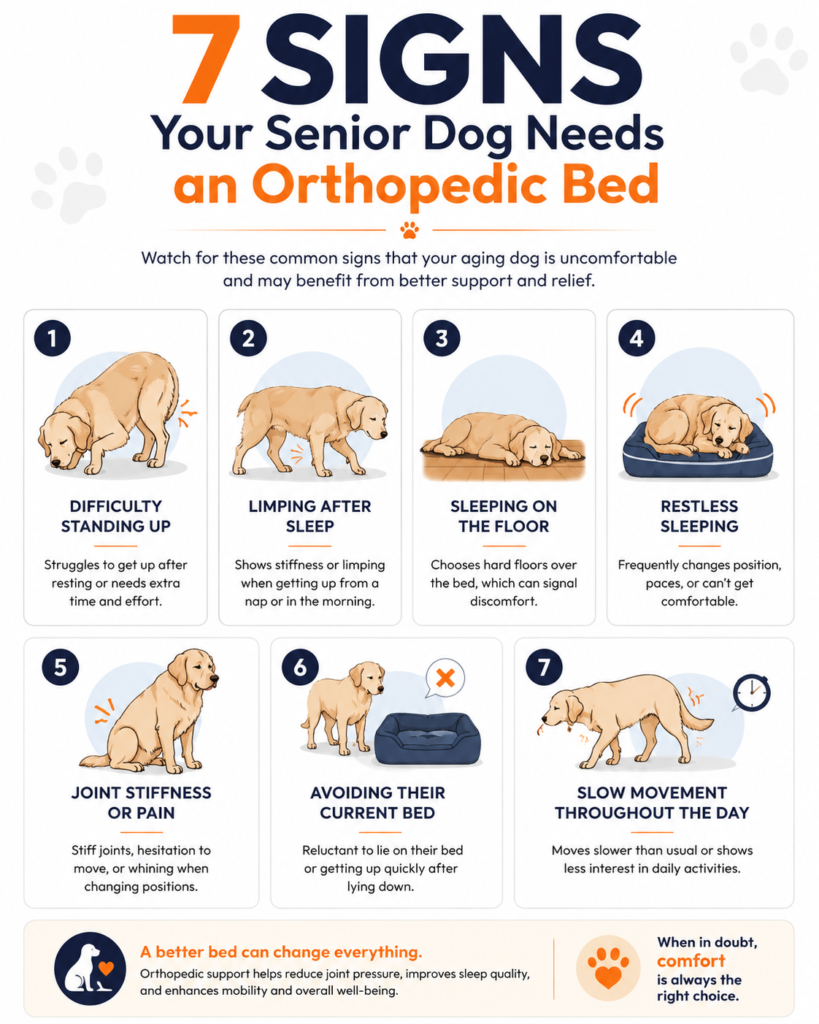
Many owners do not realize their dog’s bed is contributing to discomfort until symptoms become more obvious.
Common Signs of Poor Bed Support
| Sign | Why It Happens |
| Difficulty standing up | Pressure on joints |
| Frequent repositioning | Poor pressure relief |
| Restlessness at night | Discomfort buildup |
| Avoiding current bed | Lack of comfort |
| Sleeping on hard floors | Overheated or unsupported bed |
| Limping after sleep | Joint stiffness |
Several owners initially assumed mobility decline was unavoidable aging, only to realize later that better orthopedic support significantly improved daily comfort.
Interestingly, dogs with arthritis often preferred firmer orthopedic support instead of extremely soft plush beds.
Regular Polyester-Fill Beds
Traditional polyester-filled beds often flattened quickly under heavier senior dogs.
Over time, these beds created:
- uneven pressure distribution
- poor spinal support
- reduced cushioning
- compressed sleeping areas
Many decorative plush beds looked comfortable visually while offering surprisingly weak orthopedic support underneath.
Memory Foam Orthopedic Bed
High-quality memory foam adapted more effectively to body shape and pressure distribution.
Benefits consistently included:
- improved pressure relief
- better spinal alignment
- reduced joint compression
- improved recovery comfort
- longer-lasting structural support
Orthopedic Foam Comparison
| Foam Type | Senior Support Quality |
| Polyester fill | Poor |
| Basic foam | Moderate |
| Egg-crate foam | Good |
| High-density memory foam | Excellent |
Best Bed Features for Senior Dogs
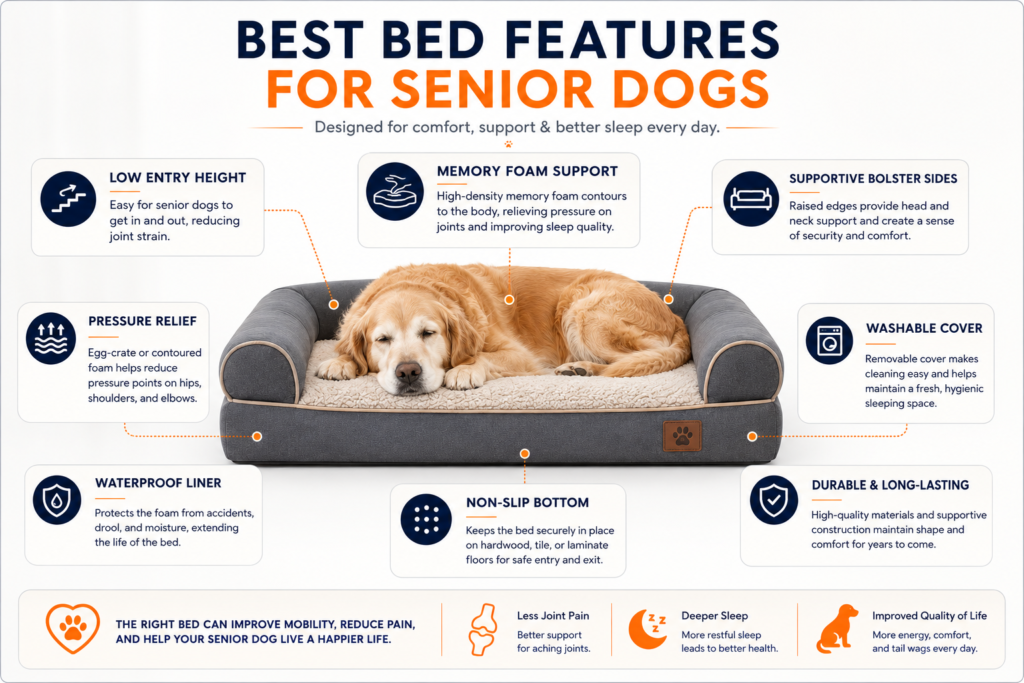
Not every orthopedic bed is equally suitable for aging dogs.
Some features mattered dramatically more during long-term evaluation.
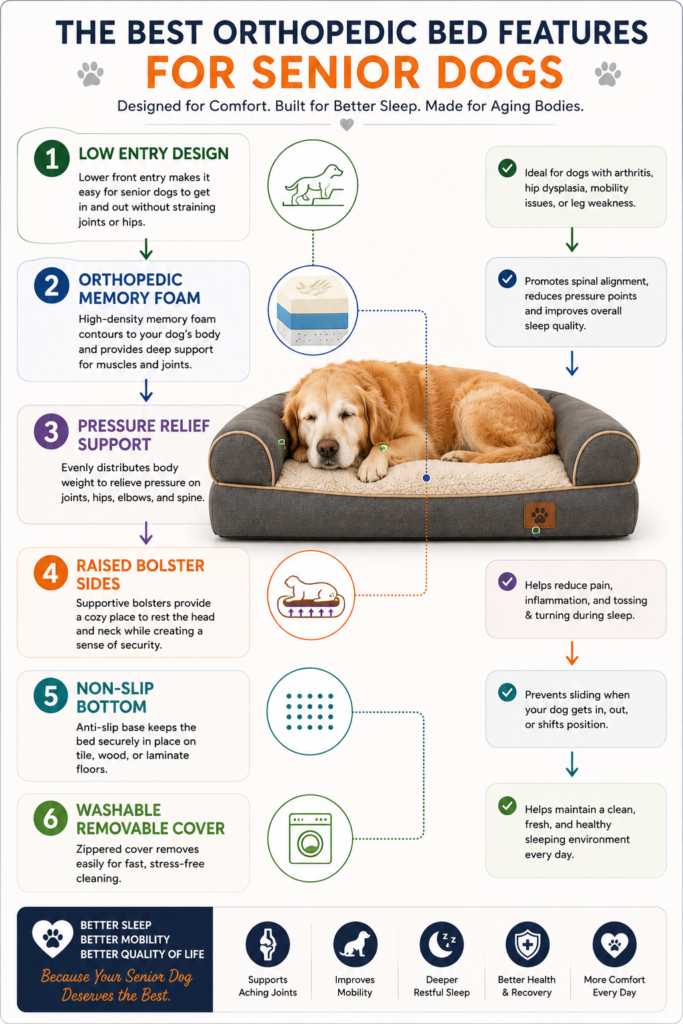
Low Entry Height
Senior dogs with arthritis or hip dysplasia consistently struggled more with tall elevated bed walls or difficult climbing access.
Low-entry orthopedic sofa beds improved accessibility substantially.
Supportive Bolster Sides
Raised bolster sides often provided:
- neck support
- spinal positioning stability
- calming comfort
- easier resting posture
Several anxious senior dogs also appeared calmer in partially enclosed bolster-style beds.
High-Density Orthopedic Foam
Support quality mattered far more than decorative appearance.
During testing, high-density CertiPUR-US orthopedic foam consistently retained support longer than cheaper low-density cushioning.
Non-Slip Bottom
Older dogs sometimes struggled when beds slid across hardwood or tile floors during entry and exit movement.
Non-slip bases noticeably improved stability.
Washable Covers
Senior dogs often require more maintenance due to accidents, drooling, mobility issues, and hygiene needs.
Machine washable removable covers dramatically simplified long-term care.
Visual Senior Dog Bed Feature Diagram
Choosing the Right Bed by Health Condition
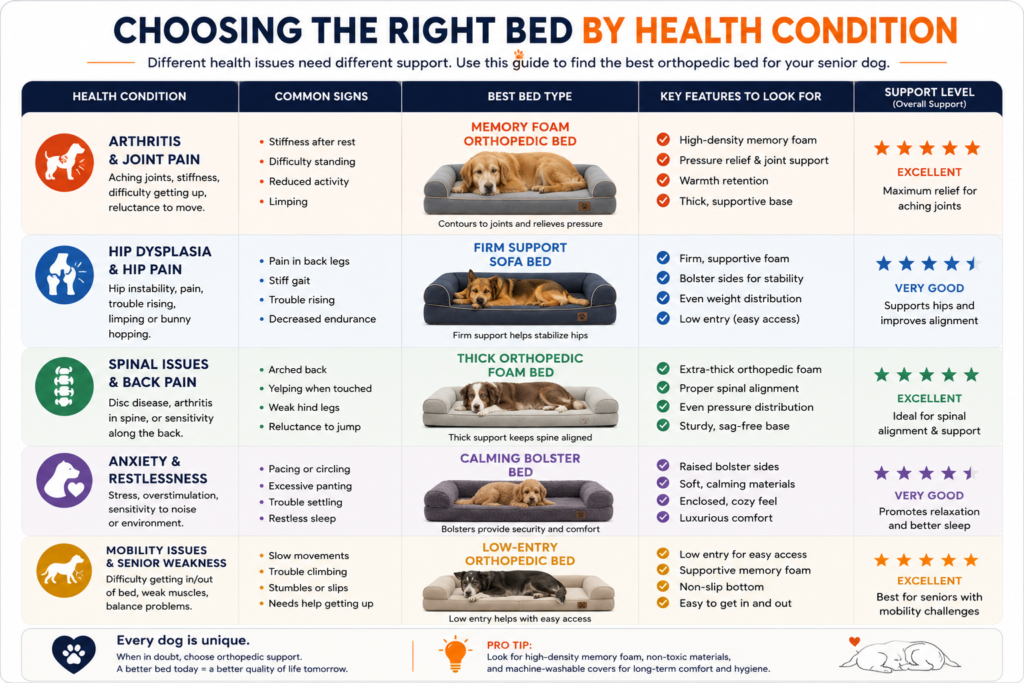
Different health conditions required different support priorities.
Arthritis & Joint Pain
Dogs with arthritis generally benefited most from orthopedic memory foam, pressure relief support, low-entry access, and warmer sleep surfaces.
Interestingly, several arthritic dogs appeared less restless overnight once pressure buildup around elbows and hips improved.
Hip Dysplasia
Dogs with hip dysplasia often needed:
- firmer support
- stable spinal alignment
- reduced sinking
- easy entry height
Large-breed orthopedic sofa beds usually performed best here.
Spinal Compression & Mobility Loss
Dogs with spinal sensitivity generally benefited from:
- evenly distributed support
- thicker orthopedic foam
- reduced pressure points
- stability during movement
Anxiety & Senior Restlessness
Some senior dogs became more anxious as mobility declined.
Calming bolster sofa beds with enclosed sides often improved:
- security
- relaxation
- sleeping consistency
For anxiety guidance, also explore:
Best Bed Type by Dog Breed & Size
As this Senior Dog Bed Guide explains, breed size plays a major role in choosing the right orthopedic bed because support needs vary with a dog’s weight and mobility.
Small Senior Dogs
Smaller breeds usually benefit from softer contouring foam, supportive bolster sides, and a low step-in height.
Common Small Senior Breeds
- Dachshunds
- Yorkies
- Chihuahuas
- Shih Tzus
Medium Senior Dogs
According to our Senior Dog Bed Guide, medium-sized breeds perform best with balanced orthopedic support and moderate-density foam that cushions joints without excessive sinking.
Common Medium Senior Breeds
- Border Collies
- Cocker Spaniels
- Bulldogs
Large & XL Senior Dogs
Large breeds require:
- Thicker orthopedic foam
- Stronger structural support
- Better pressure distribution
- Higher weight capacity
Common Large Senior Breeds
- Labradors
- Golden Retrievers
- German Shepherds
- Great Danes
One important finding from this Senior Dog Bed Guide is that many owners underestimate how quickly low-density beds flatten under heavier senior dogs. Choosing high-density orthopedic foam helps maintain long-term comfort, support, and pressure relief.
What We Noticed During Long-Term Testing

During our Senior Dog Bed Guide evaluation, several patterns became clear. Senior dogs consistently rested longer and repositioned themselves less often on supportive orthopedic beds than on traditional polyester-filled cushions.
Many owners initially believed softer beds were better, but our Senior Dog Bed Guide found that high-density orthopedic foam provided better mobility, pressure relief, and long-term comfort. Overly soft beds often made it harder for aging dogs to stand up after resting.
Large-breed senior dogs benefited the most from low-entry sofa-style beds with supportive memory foam. Another consistent finding in this Senior Dog Bed Guide was that dogs appeared calmer, slept more soundly, and used their beds more consistently when bolster support and pressure relief were combined.
Mistakes Senior Dog Owners Most Commonly Regret
During our Senior Dog Bed Guide evaluation, several common mistakes appeared repeatedly. Many owners later realized these decisions reduced their dogs’ long-term comfort more than expected.
Common Mistakes
- Waiting too long to upgrade – Poor support often causes unnecessary discomfort over time.
- Choosing beds that are too soft – Unstable cushioning can make it harder for senior dogs to stand up.
- Ignoring entry height – Low-entry beds are much easier for dogs with arthritis or hip pain.
- Buying cheap low-density foam – Budget foam flattens quickly and loses orthopedic support.
- Prioritizing appearance over comfort – Decorative beds rarely provide the support aging joints need.
One key takeaway from this Senior Dog Bed Guide is that orthopedic support, pressure relief, and accessibility consistently matter more than luxury styling or plush appearance.
How to Help Senior Dogs Sleep More Comfortably
Comfort depends on more than foam alone.
Several environmental changes consistently improved sleep quality during testing.
Helpful Senior Sleep Improvements
| Improvement | Why It Helps |
| Warm sleeping area | Reduces stiffness |
| Low-entry bed placement | Easier accessibility |
| Stable routines | Reduces anxiety |
| Orthopedic foam | Pressure relief |
| Washable bedding | Better hygiene |
| Quiet sleeping location | Improves rest |
Interestingly, many senior dogs preferred sleeping closer to family activity areas rather than isolated rooms once mobility declined.
Frequently Asked Questions
What is the best bed for a senior dog?
High-density orthopedic memory foam beds with low-entry access and supportive bolster sides consistently performed best during testing.
Do orthopedic beds help older dogs?
Yes. Orthopedic support improved:
- pressure relief
- mobility comfort
- spinal alignment
- sleep quality
Many aging dogs appeared more comfortable after switching to orthopedic support.
Is memory foam good for senior dogs?
Yes. High-quality memory foam generally provided the best balance between contouring comfort and supportive pressure distribution.
What features matter most for arthritic dogs?
The most important features include:
- pressure relief
- low entry height
- orthopedic support
- washable covers
- stable non-slip bases
Are elevated dog beds good for senior dogs?
Some elevated beds helped improve airflow, but excessively tall designs sometimes became difficult for arthritic dogs to access comfortably.
How thick should a senior dog bed be?
Medium and large senior dogs usually benefited from thicker orthopedic foam that prevented bottoming out under body weight.
Why is my older dog sleeping on the floor instead of their bed?
This sometimes indicated:
- overheating
- poor support
- flattened foam
- general discomfort using the current bed
Is softer always better for older dogs?
Not necessarily. Several senior dogs performed better with supportive orthopedic foam instead of ultra-soft unstable cushioning.
How often should senior dog beds be replaced?
Support quality should be checked regularly. Flattened foam and compressed support layers often reduce orthopedic effectiveness over time.
Do bolster beds help senior dogs?
Yes. Bolster sides frequently improved:
- neck support
- security
- relaxation
- sleeping posture stability
Final Verdict
This Senior Dog Bed Guide shows that choosing the right orthopedic bed can significantly improve comfort, mobility, sleep quality, and daily well-being for aging dogs.
Throughout our Senior Dog Bed Guide evaluation, high-density orthopedic foam, low-entry designs, pressure relief, and supportive bolster sides consistently outperformed decorative beds with poor support. Many owners initially focused on softness but later found that proper pressure distribution made a much bigger difference for arthritic joints and aging mobility.
Large-breed senior dogs benefited the most from durable orthopedic foam that maintained its shape over time. Many owners also reported that their dogs rested longer, repositioned themselves less often, and appeared more comfortable after switching to an orthopedic sofa bed.
As this Senior Dog Bed Guide demonstrates, investing in the right orthopedic bed can make a meaningful difference in your dog’s comfort and quality of life.
- 10 Best Dog Sofa Beds: Tested & Ranked (2026)
- Best Memory Foam Dog Sofa Beds
- Best Waterproof Dog Sofa Beds
- Pet Sofa Bed with Bolster Sides
Expert Recommendation
“Support quality matters far more than softness for senior dogs. Proper orthopedic pressure relief can significantly improve comfort, mobility, and sleep consistency in aging pets.”
Dr. Michael Reynolds, DVM
About the Author
Emily Carter has spent more than six years researching orthopedic pet furniture, canine sleep behavior, senior dog mobility, and long-term dog sofa bed durability. Her work focuses on helping pet owners choose products that improve comfort, joint support, and overall quality of life for aging dogs.
While researching and writing this Senior Dog Bed Guide, Emily evaluated orthopedic foam performance, pressure relief systems, bolster support, and real-world usability across a wide range of orthopedic dog beds. Her recommendations are based on practical observation and evidence-based buying guidance rather than marketing claims.
This Senior Dog Bed Guide was medically reviewed by Dr. Michael Reynolds, DVM, who specializes in canine wellness, orthopedic care, mobility support, and senior pet health.