
Last Updated: June 2026
When Should You Replace Your Dog’s Sofa Bed? Most dogs need a replacement when the foam loses support, odors persist after cleaning, or they begin avoiding the bed. High-quality orthopedic dog sofa beds typically last 3–5 years, while lower-quality beds may need replacing much sooner.
The problem is that appearance rarely tells the full story.
A dog bed can lose support, comfort, hygiene, and durability long before the cover starts falling apart. In some cases, a bed that looks perfectly usable may no longer provide the pressure relief and joint support your dog needs.
During evaluation of long-term dog bed use, one pattern appeared repeatedly: owners often noticed behavioral changes before they noticed physical damage to the bed itself.
Many owners initially assumed their dog was simply getting older, sleeping more, or becoming less active. Interestingly, some of those changes improved after replacing a worn-out bed with a supportive new one.
If you’re wondering:
- How often should you replace a dog’s bed?
- How do you know when a dog bed is worn out?
- How long does a quality dog sofa bed last?
- What are the warning signs of support loss?
This guide explains exactly what to watch for and when replacement becomes the better choice.
How Long Does a Dog Sofa Bed Usually Last?
When Should You Replace Your Dog’s Sofa Bed? The answer depends on foam quality, your dog’s size, daily use, cleaning habits, material construction, and the overall build quality of the bed.
During evaluation, one trend became clear. Budget beds often lost support within one to two years, while high-quality orthopedic sofa beds commonly maintained their comfort and structure for three to five years or longer. In many cases, the cover remained in good condition while the internal foam gradually compressed, reducing support long before obvious damage appeared.
This is why When Should You Replace Your Dog’s Sofa Bed is often determined by comfort and support rather than appearance alone.
Why Replacing a Dog Bed Matters
Many owners judge a bed by how clean it looks, but When Should You Replace Your Dog’s Sofa Bed is usually about support, not appearance.
Dogs spend many hours sleeping each day, and worn-out foam can increase pressure on joints and muscles. This is especially important for:
- Senior dogs
- Large breeds
- Dogs with arthritis
- Dogs with hip dysplasia
- Dogs recovering from injuries
During evaluation, supportive orthopedic beds consistently provided better long-term comfort than flattened beds. Understanding When Should You Replace Your Dog’s Sofa Bed can help prevent unnecessary joint pain and improve sleep quality. For guidance on choosing a replacement, see our complete guide to dog sofa beds.
7 Signs It’s Time to Replace Your Dog’s Sofa Bed
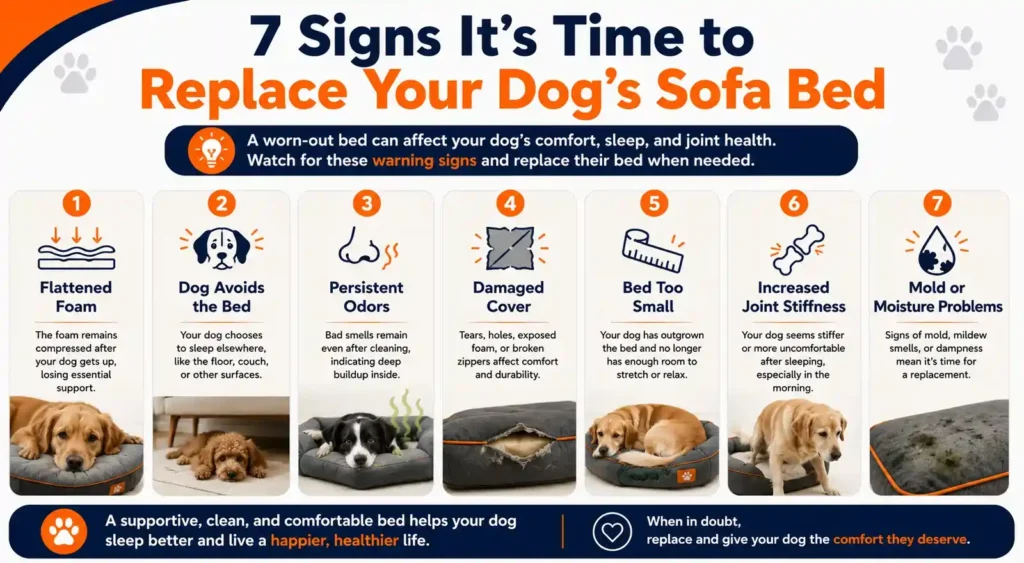
These warning signs make it easier to decide When Should You Replace Your Dog’s Sofa Bed before comfort begins to decline
1. The Foam Has Flattened
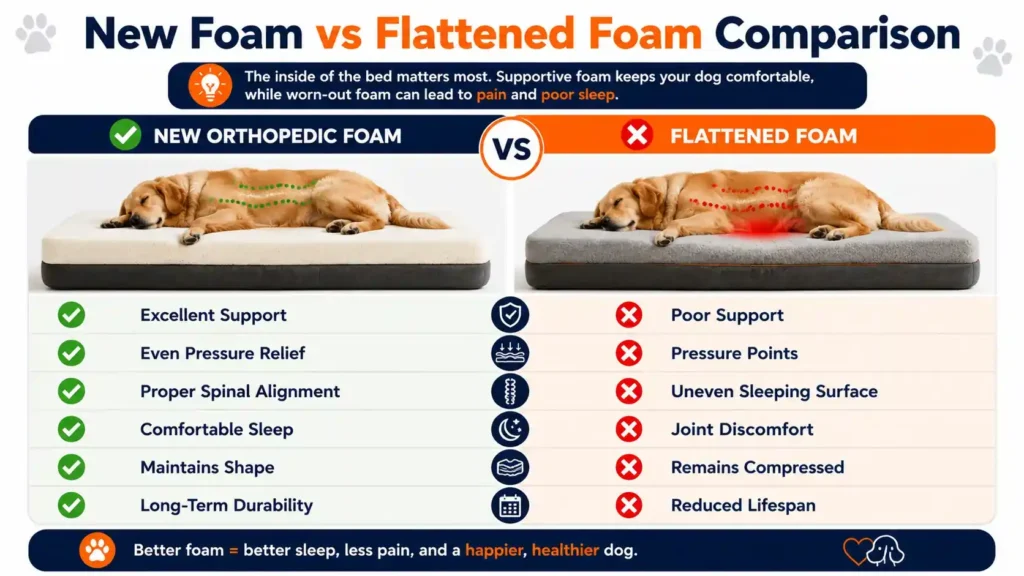
One of the clearest answers to When Should You Replace Your Dog’s Sofa Bed is when the foam remains compressed after your dog stands up.
Flattened foam reduces joint support, pressure relief, and sleeping comfort, even if the cover still looks new.
2. Your Dog Starts Avoiding the Bed
Dogs often communicate discomfort by changing where they sleep.
If your dog suddenly starts sleeping on the floor, rugs, couch, or cooler surfaces instead of their favorite bed, it may be a sign that support has declined. During observation, this was one of the earliest indicators of When Should You Replace Your Dog’s Sofa Bed.
3. Persistent Odors Remain After Cleaning
Over time, oils, saliva, moisture, dirt, and accidents can penetrate the internal foam.
If unpleasant odors remain after washing, replacing the bed is often more practical than continued cleaning.
For cleaning advice, see our how to clean a dog sofa bed guide.
4. The Cover Is Damaged Beyond Repair
Small tears are normal, but exposed foam, broken zippers, and heavily worn fabric reduce durability and comfort.
Sometimes replacement covers are available, but in many cases a completely new bed offers better long-term value.
5. Your Dog Has Outgrown the Bed
As dogs grow, their sleeping habits change.
They need enough room to stretch, roll over, change positions, and sleep comfortably. If the bed now feels cramped, When Should You Replace Your Dog’s Sofa Bed may simply come down to choosing the correct size.
For sizing help, visit our Dog Sofa Bed Size Guide.
6. Joint Stiffness Appears Worse After Sleeping
Many owners assume stiffness is only caused by aging.
However, worn-out foam can increase pressure on the hips, shoulders, elbows, and spine. Several senior dogs appeared noticeably more comfortable after switching to a supportive orthopedic sofa bed.
7. Mold, Moisture, or Hygiene Problems Develop
Moisture trapped inside the foam creates hygiene concerns that cannot always be solved with cleaning.
Visible mold, mildew smells, or persistent dampness usually indicate it’s time to replace the entire bed.
Quick Replacement Guide by Dog Type
This timeline provides a useful starting point for deciding When Should You Replace Your Dog’s Sofa Bed based on your dog’s age and lifestyle.
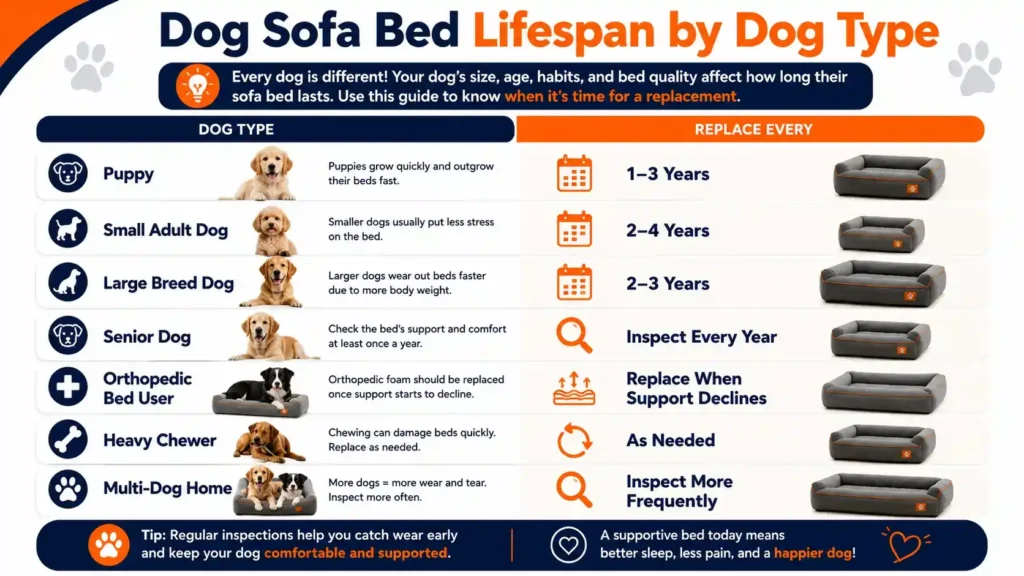
| Dog Type | Suggested Replacement Timeline |
|---|---|
| Puppy | Every 1–3 years |
| Small Adult Dog | Every 2–4 years |
| Large Breed Dog | Every 2–3 years |
| Senior Dog | Inspect every year |
| Orthopedic Bed User | Replace when support declines |
| Heavy Chewer | As needed |
| Multi-Dog Household | Inspect more frequently |
What We Noticed During Long-Term Observation
One of the strongest indicators of When Should You Replace Your Dog’s Sofa Bed was not visible damage—it was changing behavior.
Many dogs gradually spent less time on aging beds before owners noticed any obvious wear. Older dogs, in particular, responded quickly after moving from flattened beds to supportive orthopedic models.
During evaluation, dogs consistently cared more about support than appearance.
What Surprised Us Most During Evaluation
One surprising discovery was how often beds looked perfectly acceptable while no longer providing proper support.
Internal foam deterioration frequently occurred months before visible damage appeared. Many owners blamed age-related stiffness when the real issue was a worn-out bed.
Several dogs became noticeably more comfortable after replacement, reinforcing that When Should You Replace Your Dog’s Sofa Bed often comes earlier than expected.
Mistakes Owners Commonly Make
Common mistakes include:
- Waiting until the bed completely falls apart
- Judging only by appearance
- Ignoring changes in sleeping behavior
- Buying another low-quality replacement
Investing in a durable orthopedic sofa bed usually improves both comfort and longevity.
How to Extend the Life of a Dog Sofa Bed

Although every bed eventually needs replacing, proper care can extend its lifespan.
Wash removable covers regularly, clean accidents immediately, rotate cushions when possible, inspect the foam for compression, and keep the bed dry.
These simple habits won’t stop natural foam aging, but they can significantly delay When Should You Replace Your Dog’s Sofa Bed and help maintain comfort for much longer.
Frequently Asked Questions
How often should you replace a dog’s bed?
Most quality dog beds last between two and five years, depending on:
- daily usage
- material quality
- foam density
- overall support retention
Regular inspection helps determine when replacement is needed.
How do you know when a dog bed is worn out?
Common signs include:
- flattened foam
- persistent odors
- damaged covers
- loss of support
- changes in your dog’s sleeping behavior
If your dog seems uncomfortable or avoids the bed, it may be time for a replacement.
How long does an orthopedic dog bed last?
Higher-quality orthopedic beds often last three to five years or more when properly maintained.
High-density foam and removable washable covers usually extend their lifespan.
Can a worn-out bed affect my dog’s joints?
Yes. Reduced support can increase pressure on:
- joints
- hips
- spine
- pressure points
This is especially important for senior dogs and pets with arthritis.
Why does my dog suddenly stop using their bed?
Possible reasons include:
- loss of support
- uncomfortable foam
- trapped odors
- changing preferences
- age-related comfort needs
Should I replace the cover or the entire bed?
If the foam remains supportive, replacing the cover may be sufficient.
If the foam has flattened or no longer provides proper support, replacing the entire bed is usually the better long-term solution.
Is it normal for dog beds to flatten?
Yes. All foam gradually compresses with regular use.
However, higher-density orthopedic foam generally maintains its shape and support much longer than standard polyester-filled beds.
Can a dog bed last more than five years?
Some premium dog beds can remain comfortable for more than five years when made with high-quality materials.
Even so, regular inspection is important to ensure the bed continues providing adequate support and comfort.
Final Verdict
When Should You Replace Your Dog’s Sofa Bed? Usually sooner than most owners expect. During evaluation, dogs often showed signs of declining comfort long before owners noticed visible damage.
If the foam has flattened, odors persist after cleaning, support has declined, or your dog has started avoiding the bed, When Should You Replace Your Dog’s Sofa Bed becomes an important question to answer. Replacing a worn-out bed can significantly improve comfort, especially for senior dogs and large breeds.
Ultimately, When Should You Replace Your Dog’s Sofa Bed depends more on support quality than appearance. A supportive orthopedic bed is one of the best long-term investments you can make for your dog’s comfort and joint health.
For additional guidance on When Should You Replace Your Dog’s Sofa Bed, explore:
- best dog sofa beds reviewed
- Best Orthopedic Dog Sofa Beds
- Best Memory Foam Dog Sofa Beds
- Best Waterproof Dog Sofa Bed
- Best Pet Sofa Covers
About the Author
Emily Carter has spent more than six years researching pet furniture, canine comfort systems, orthopedic pet beds, and long-term sleeping behavior in dogs. Her work focuses on understanding how support quality, bed design, durability, and maintenance influence pet wellbeing over time.
Throughout her research, Emily has evaluated hundreds of dog beds, sofa beds, orthopedic loungers, and comfort-focused pet products. Through PetSofaGuide, she helps owners make informed decisions using practical observations, behavioral insights, and experience-driven guidance to improve comfort, safety, and quality of life for pets.