Last Updated: June 2026
How to Clean a Dog Sofa Bed properly is one of the most important parts of maintaining pet hygiene, controlling odors, and extending the lifespan of orthopedic foam and upholstery. Regular cleaning removes fur, dirt, bacteria, skin oils, and moisture that can gradually build up inside dog sofa beds over time.
To clean a dog sofa bed properly, vacuum loose fur and dirt, remove and wash the cover using pet-safe detergent, spot clean stains with an enzyme cleaner, clean orthopedic foam carefully without soaking it, and allow everything to air dry completely before reassembly. Weekly vacuuming and regular cover washing help prevent odors, bacteria, and premature wear. Learning How to Clean a Dog Sofa Bed correctly can help prevent odors, bacteria buildup, and premature wear.
How to Clean a Dog Sofa Bed is a question many owners ask once odors, fur buildup, stains, and everyday wear begin affecting their dog’s sleeping space.
If you have ever wondered:
- How do you wash a dog sofa bed?
- Can you put a dog sofa bed in the washing machine?
- How do you remove dog smell from a sofa bed?
- Should memory foam go in the dryer?
- How often should dog beds be cleaned?
This guide explains How to Clean a Dog Sofa Bed safely while protecting orthopedic foam, removable covers, and upholstery fabrics.
For additional maintenance guidance, also explore:
- how to remove dog hair from a sofa bed
- how to stop your dog chewing their sofa bed
- when should you replace your dog sofa bed
- Best Fabrics for Pet Sofa Beds
- complete guide to dog sofa beds
Why Cleaning Dog Sofa Beds Matters
Dog sofa beds collect far more contamination than many owners realize. Understanding How to Clean a Dog Sofa Bed properly helps maintain comfort, hygiene, and long-term durability.
Over time, orthopedic pet beds absorb:
- fur
- saliva
- skin oils
- dirt
- allergens
- bacteria
- moisture
- outdoor debris
- urine accidents
- food particles
Without regular cleaning, this buildup can create:
- strong pet odor
- skin irritation
- bacterial growth
- mold problems
- allergy triggers
- faster fabric deterioration
- foam breakdown
During long-term testing, dirty orthopedic beds consistently lost comfort and freshness much faster than properly maintained sofa beds.
Interestingly, odor buildup often originated inside foam layers rather than outer covers alone, especially in memory foam beds exposed to repeated moisture.
Proper cleaning not only improves pet hygiene but also extends:
- orthopedic foam lifespan
- removable cover durability
- stain resistance
- sleeping comfort
- pressure relief performance
How Often Should You Clean a Dog Sofa Bed?
Knowing How to Clean a Dog Sofa Bed is only part of the process; following a regular cleaning schedule is equally important. Cleaning frequency depends heavily on:
- shedding level
- outdoor activity
- fabric type
- allergies
- accidents
- drooling
- skin conditions
- climate humidity
Recommended Cleaning Schedule
| Cleaning Task | Recommended Frequency |
| Vacuum surface | 1–2 times weekly |
| Wash removable cover | Every 2–4 weeks |
| Spot clean stains | Immediately |
| Deep clean foam | Every 2–3 months |
| Odor treatment | As needed |
| Full sanitizing clean | Every season |
Large shedding breeds like:
- Huskies
- German Shepherds
- Labradors
- Golden Retrievers
…usually require more frequent maintenance than low-shedding companion breeds.
Senior dogs and puppies may also require additional cleaning due to accidents or incontinence.
Supplies You’ll Need

Before learning How to Clean a Dog Sofa Bed effectively, it helps to gather the right cleaning supplies. Using the correct cleaning products matters more than many owners realize.
Harsh detergents, bleach, and high heat can permanently damage orthopedic foam and upholstery materials.
Recommended Cleaning Supplies
| Cleaning Item | Purpose |
| Pet-safe detergent | General washing |
| Vacuum with upholstery attachment | Fur removal |
| Enzyme cleaner | Odor & urine removal |
| Baking soda | Natural deodorizing |
| Microfiber cloth | Spot cleaning |
| Soft brush | Surface cleaning |
| Spray bottle | Diluted cleaning solution |
| Towels | Moisture absorption |
How to Clean a Dog Sofa Bed Step by Step
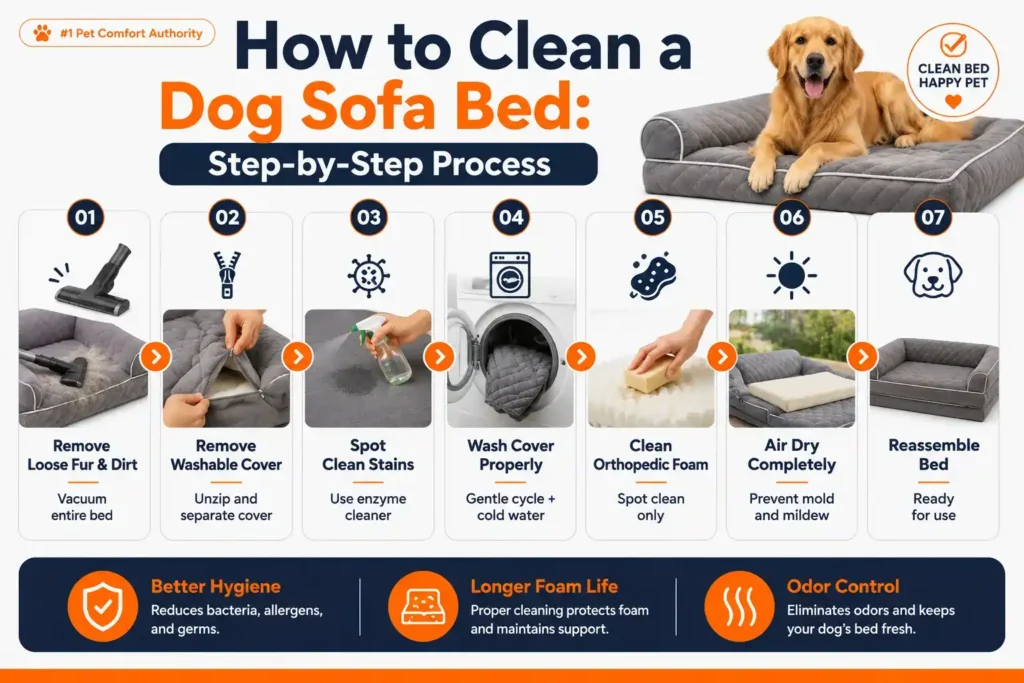
Following the correct order dramatically improves cleaning effectiveness.
Step 1: Remove Loose Fur and Dirt
Before washing anything, vacuum the entire sofa bed thoroughly.
Focus especially on:
- bolster seams
- zipper areas
- corners
- creases
- sleeping center
During testing, skipping this step caused fur to clump heavily during washing cycles.
Rubber pet hair brushes also worked surprisingly well for stubborn embedded shedding.
Step 2: Remove the Washable Cover
An important part of How to Clean a Dog Sofa Bed involves washing removable covers without damaging zippers or fabric. Most modern orthopedic dog sofa beds include removable washable covers. If you’re dealing with frequent spills or accidents, our roundup of waterproof dog sofa beds highlights models with liners that make washing even easier.
Carefully unzip and remove:
- bolster covers
- sleeping surface cover
- waterproof liners (if removable)
Always check manufacturer instructions before washing.
Brands like:
- Furhaven
- Bedsure
- Club Nine Pets
- FunnyFuzzy
- EHEYCIGA
…often use different washing recommendations depending on fabric type.
Step 3: Spot Clean Visible Stains
Before machine washing, treat stains directly.
Use:
- enzyme cleaner for urine
- diluted detergent for dirt
- baking soda for odors
Let the cleaning solution sit for 10–15 minutes before wiping gently.
During testing, enzyme cleaners consistently removed pet odor much more effectively than regular detergent alone.
Step 4: Wash the Cover Properly
Most removable dog sofa covers can be machine washed safely if handled correctly.
Best Washing Settings
| Setting | Recommendation |
| Water temperature | Cold or lukewarm |
| Cycle type | Gentle |
| Detergent | Pet-safe mild detergent |
| Bleach | Avoid |
| Fabric softener | Avoid |
Hot water often caused:
- shrinkage
- zipper warping
- fabric weakening
- waterproof liner damage
Machine washing worked best when covers were washed separately rather than mixed with heavy laundry.
How to Wash Removable Covers
Removable washable covers simplify long-term maintenance dramatically.
However, many owners accidentally shorten their cover lifespan through aggressive washing habits.
Best Practices for Cover Washing
- zip covers fully closed before washing
- use gentle detergent
- avoid bleach
- wash separately
- avoid overloading machine
- use low spin settings
Performance fabrics and microfiber covers generally handled repeated washing much better than velvet upholstery.
How to Clean Orthopedic Foam Safely
Many owners researching How to Clean a Dog Sofa Bed are surprised to learn that memory foam should never be fully soaked. Orthopedic foam requires completely different cleaning methods than removable covers.
Never Fully Soak Memory Foam
One of the biggest mistakes owners make is soaking orthopedic foam in water.
Memory foam absorbs moisture deeply and dries very slowly, increasing risk of:
- mold growth
- mildew
- odor trapping
- foam deterioration
Instead:
- lightly spot clean
- use damp cloth only
- avoid saturation
- towel absorb excess moisture immediately
Best Foam Cleaning Method
- Vacuum foam lightly
- Spot clean stains carefully
- Apply baking soda
- Let sit several hours
- Vacuum again
- Air dry completely
During testing, baking soda consistently reduced odor without damaging foam structure.
How to Remove Dog Odor from Sofa Beds
One of the most common reasons people search for How to Clean a Dog Sofa Bed is persistent odor buildup. Pet odor usually penetrates deeper than surface fabric alone.
This becomes especially noticeable in:
- memory foam beds
- plush upholstery
- heavily used orthopedic sofas
Best Odor Removal Methods
| Method | Effectiveness |
| Enzyme cleaner | Excellent |
| Baking soda | Very good |
| Vinegar dilution | Moderate |
| Air drying in sunlight | Very good |
| Scent sprays | Temporary only |
Interestingly, sunlight exposure helped reduce lingering odor better than many scented cleaners during testing.
However, prolonged direct sunlight may fade darker upholstery fabrics over time.
Machine Wash vs Hand Wash
A common part of learning How to Clean a Dog Sofa Bed is understanding when machine washing is safe and when hand washing is better. Not all sofa bed materials tolerate machine washing equally.
Machine Wash Best For
- removable microfiber covers
- canvas covers
- performance fabric covers
- polyester upholstery
Hand Wash Best For
- velvet covers
- faux leather sections
- delicate upholstery
- luxury decorative fabrics
Machine washing delicate luxury upholstery often caused texture flattening during evaluation.
Air Dry vs Dryer
Proper drying is a critical step in How to Clean a Dog Sofa Bed because trapped moisture can cause odor and mildew problems. Drying methods matter just as much as washing itself.
Why Air Drying Is Safer
Air drying protects:
- waterproof liners
- zipper structure
- upholstery texture
- foam integrity
- fabric elasticity
High dryer heat caused noticeable shrinkage in several orthopedic bed covers during testing.
Best Drying Practices
| Method | Recommendation |
| Air dry | Best overall |
| Low heat dryer | Sometimes acceptable |
| High heat dryer | Avoid |
| Direct foam drying | Required |
Never reassemble orthopedic beds until completely dry internally.
Even small trapped moisture pockets can create mildew odor over time.
Cleaning Different Fabric Types
The best approach to How to Clean a Dog Sofa Bed often depends on the upholstery material being cleaned. Different upholstery materials require slightly different maintenance strategies.
Microfiber
Microfiber cleaned extremely easily during testing and resisted stain absorption surprisingly well.
Velvet
Velvet required gentler washing and more brushing afterward to maintain texture appearance.
Faux Leather
Faux leather performed best with wipe-clean maintenance rather than machine washing.
Canvas
Canvas tolerated repeated washing better than most decorative upholstery materials.
For upholstery guidance, continue with:
Common Dog Bed Cleaning Mistakes

Avoiding these mistakes makes How to Clean a Dog Sofa Bed much more effective and safer for orthopedic materials. Several mistakes repeatedly damaged orthopedic beds during evaluation.
Most Common Problems
| Mistake | Why It Causes Damage |
| Using hot water | Shrinks covers |
| Soaking memory foam | Causes mold risk |
| High heat dryer | Weakens fabric |
| Using bleach | Damages upholstery |
| Reassembling while damp | Traps mildew |
| Skipping vacuuming | Embeds fur deeper |
Owners who understand How to Clean a Dog Sofa Bed properly should also follow a cleaning schedule that matches their dog’s lifestyle. One of the biggest long-term problems involved owners washing covers properly but ignoring internal foam odor buildup completely.
Cleaning Schedule by Dog Type

Different dogs create very different maintenance needs.
| Dog Type | Recommended Cleaning Frequency |
| Heavy shedders | Weekly vacuuming |
| Puppies | Frequent spot cleaning |
| Senior dogs | Biweekly washing |
| Outdoor dogs | More frequent sanitizing |
| Low-shedding breeds | Moderate cleaning |
| Allergy-sensitive homes | Weekly maintenance |
Frequently Asked Questions
How do you wash a dog sofa bed?
Remove the washable cover, vacuum fur thoroughly, spot clean stains, machine wash gently with pet-safe detergent, and air dry completely before reassembly.
Can you put a dog sofa bed in the washing machine?
Most removable covers can be machine washed, but orthopedic foam should usually be spot cleaned instead of machine washed.
This helps preserve foam structure and prevents moisture-related damage.
How do you remove pet odor from a sofa bed?
These methods generally work best:
- enzyme cleaners
- baking soda treatment
- thorough air drying
- regular vacuuming
These approaches help remove deep pet odors safely and effectively.
Can memory foam go in the washing machine?
No. Most memory foam should never be machine washed because trapped moisture may cause:
- mold growth
- foam deterioration
- loss of support
- unpleasant odors
Should dog bed covers be air dried?
Yes. Air drying is usually the safest option because high dryer heat may:
- shrink covers
- damage waterproof liners
- reduce fabric lifespan
- affect fit and shape
How often should dog sofa beds be cleaned?
A practical cleaning schedule is:
- vacuum weekly
- wash covers every 2–4 weeks
- deep clean orthopedic foam every few months
The exact frequency depends on shedding, accidents, and daily use.
What is the best cleaner for dog urine on beds?
Enzyme cleaners consistently performed best during testing because they break down odor-causing organic material more effectively than standard detergents.
They also help reduce repeat marking caused by lingering odors.
Final Verdict: How to Clean a Dog Sofa Bed
By following the recommendations in this guide, How to Clean a Dog Sofa Bed becomes a simple routine rather than a difficult maintenance task.
Regular cleaning is one of the easiest ways to extend the life of a dog sofa bed. Weekly vacuuming, prompt stain treatment, proper foam care, and complete air drying help maintain comfort, hygiene, and odor control. Ultimately, understanding How to Clean a Dog Sofa Bed properly is one of the easiest ways to improve hygiene, comfort, and bed longevity. Whether you’re dealing with shedding, stains, accidents, or lingering odors, knowing How to Clean a Dog Sofa Bed correctly can prevent costly replacements and keep your dog’s sleeping area healthier.
For most households, the best routine is simple: vacuum weekly, wash removable covers every few weeks, and deep clean orthopedic foam every few months. Consistent maintenance works far better than occasional intensive cleaning and helps keep your dog’s sleeping space fresh, comfortable, and supportive for years. We hope this guide on How to Clean a Dog Sofa Bed helps you keep your dog’s sleeping space cleaner, fresher, and more comfortable year-round.
Expert Recommendation
“Regular low-stress maintenance preserves orthopedic support and improves long-term hygiene much better than infrequent aggressive deep cleaning. Weekly vacuuming and proper drying make a major difference.”
Dr. Michael Reynolds, DVM
About the Author
Emily Carter has spent more than 6 years researching orthopedic pet furniture, washable upholstery systems, canine sleep hygiene, and long-term dog bed durability.
Her work focuses on evaluating orthopedic foam performance, removable cover durability, cleaning safety, odor control systems, and real-world maintenance usability across modern dog sofa bed categories. She has extensively studied how to clean a dog sofa bed properly to maximize hygiene, comfort, and product lifespan.
This article was medically reviewed by Dr. Michael Reynolds, DVM, who specializes in canine wellness, orthopedic comfort, senior dog support, and pet hygiene systems. His expertise helps ensure the recommendations on how to clean a dog sofa bed are safe, practical, and aligned with long-term canine health and comfort.