
If you’re wondering how to stop your dog from chewing their sofa bed, the solution usually involves understanding the cause of the behavior, providing appropriate chew alternatives, and making the bed less appealing as a target. Many owners replace damaged beds repeatedly without addressing the real cause.
How to stop your dog from chewing their sofa bed depends on identifying the reason behind the behavior. Most dogs chew beds because of teething, boredom, anxiety, excess energy, or lack of mental stimulation. The most effective solution combines exercise, enrichment activities, calm redirection, consistent routines, and a durable chew-resistant sofa bed designed to withstand destructive behavior.
In this guide, you’ll learn how to stop your dog from chewing their sofa bed, understand the reasons behind the behavior, and discover practical solutions that actually work. Understanding How to Stop Your Dog from Chewing Their Sofa Bed starts with identifying the underlying cause of the behavior.
For additional behavioral and care guidance, also explore our:
- chew-resistant dog sofa beds
- best dog sofa beds reviewed
- how to train your dog to use their sofa bed
- how to clean a dog sofa bed
- guide explaining when you should replace your dog’s bed
Why Dogs Chew Their Sofa Beds

Dogs chew their sofa beds for several reasons, including teething, boredom, anxiety, stress, and excess energy. Understanding the cause is the first step in learning How to Stop Your Dog from Chewing Their Sofa Bed effectively.
Bored and under-stimulated dogs often chew to entertain themselves, while anxious dogs may target beds when left alone. During evaluation, dogs with regular exercise, mental enrichment, and predictable routines were far less likely to destroy their beds. Addressing the underlying cause is far more effective than simply replacing damaged bedding.
Why Puppies Chew Beds
Puppies commonly chew sofa beds during teething and early development. Chewing helps relieve discomfort, explore textures, and release excess energy. Soft bolster edges, seams, zippers, and fabric corners are often the most attractive chewing targets.
Because puppies and adult dogs chew for different reasons, How to Stop Your Dog from Chewing Their Sofa Bed often depends on your dog’s age and the cause of the behavior.
Most Common Puppy Chewing Targets
| Bed Area | Why Puppies Target It |
| Zippers | Movement & texture |
| Bolster corners | Easy grip |
| Plush seams | Soft chewing feedback |
| Handles & tags | Interactive movement |
Interestingly, puppies generally improved fastest when owners redirected chewing calmly toward enrichment toys and structured routines rather than relying heavily on punishment alone.
Why Adult Dogs Destroy Beds
Adult dogs usually destroy beds because of boredom, anxiety, stress, frustration, or lack of mental stimulation rather than teething.
Many owners focus only on exercise, but How to Stop Your Dog from Chewing Their Sofa Bed often requires enrichment activities, training, and a more predictable routine. Dogs that continued destroying beds despite regular exercise frequently benefited from additional mental stimulation and structured daily activities.
Signs Your Dog’s Bed Chewing Is Anxiety Related
Anxiety-related chewing often happens when dogs are left alone and can be much more intense than normal chewing. Common signs include chewing shortly after you leave, pacing, whining, repeated destruction of the same bed areas, and difficulty settling down.
If your dog shows these behaviors, How to Stop Your Dog from Chewing Their Sofa Bed may require addressing anxiety through routine, enrichment, training, and a calmer sleeping environment rather than relying on punishment or anti-chew sprays alone.
Best Solution Based on Why Your Dog Is Chewing

| Cause | Best Solution |
|---|---|
| Teething | Frozen chew toys |
| Boredom | Enrichment activities |
| Anxiety | Predictable routines |
| Excess Energy | More exercise |
| Compulsive Chewing | Behavioral training |
How to Stop Your Dog from Chewing Their Sofa Bed Step by Step

Successfully learning How to Stop Your Dog from Chewing Their Sofa Bed usually requires a combination of exercise, enrichment, training, and durable bedding rather than a single quick fix.
Step 1: Increase Daily Exercise
Under-exercised dogs are far more likely to develop destructive chewing habits. Regular walks, play sessions, and interactive activities help reduce excess energy and frustration.
Step 2: Add Mental Stimulation
Mental enrichment is often just as important as physical exercise. Dogs left inactive for long periods frequently redirect boredom into chewing behavior.
Best Mental Enrichment Activities
| Enrichment Type | Why It Helps |
|---|---|
| Puzzle feeders | Mental focus |
| Frozen Kong toys | Long engagement |
| Scent games | Natural instinct outlet |
| Snuffle mats | Calming stimulation |
| Training sessions | Mental fatigue |
Step 3: Redirect Instead of Punish
Punishment rarely solves bed chewing long term. Instead, calmly redirect your dog to appropriate chew toys and reward calm behavior around the bed.
Step 4: Upgrade to a More Durable Sofa Bed
Choosing the right bed can make a big difference in How to Stop Your Dog from Chewing Their Sofa Bed. Tightly woven canvas, performance fabrics, reinforced seams, and hidden zippers generally last much longer than plush fabrics, faux fur, or exposed decorative stitching.
Common Bed Chewing Mistakes Owners Make
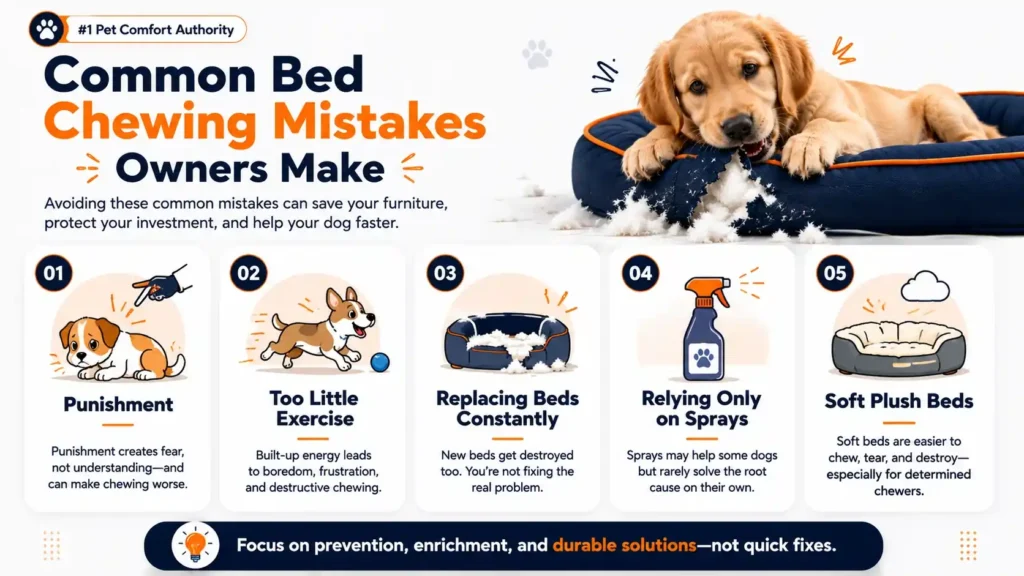
Many owners unintentionally make bed chewing worse by focusing on the damaged bed rather than the reason behind the behavior.
Replacing beds repeatedly without addressing boredom, anxiety, or excess energy often leads to the same result with every new bed.
Using punishment can also backfire. Dogs rarely connect punishment to the earlier chewing behavior, and anxious dogs may become even more stressed.
Under-exercising dogs is another common mistake. Many dogs chew simply because they have excess physical or mental energy with no healthy outlet.
Some owners rely only on anti-chew sprays, expecting a quick fix. While sprays may discourage chewing temporarily, they rarely solve the underlying cause.
Finally, many people keep buying soft plush beds repeatedly. Plush fabrics often provide satisfying texture and resistance, making them more appealing for destructive chewers than durable chew-resistant materials.
The most successful approach combines exercise, mental stimulation, training, routine consistency, and a more durable sofa bed designed for active or destructive dogs.
Best Chew-Resistant Sofa Bed Materials
Choosing durable materials can play an important role in How to Stop Your Dog from Chewing Their Sofa Bed. While no bed is completely chew-proof, some fabrics hold up much better than others.
Canvas
Tightly woven canvas resists scratching, digging, and everyday chewing better than most plush fabrics.
Ballistic Fabric
Ballistic fabric offers exceptional tear resistance and is designed to withstand heavy use from active or destructive dogs.
Performance Fabric
Performance fabrics balance durability, comfort, stain resistance, and everyday practicality.
Dense Microfiber
Dense microfiber provides a softer sleeping surface while still resisting wear better than many decorative fabrics.
For the best durability, look for tightly woven fabrics, reinforced seams, and hidden zippers that reduce common chewing targets.
Anti-Chew Sprays: Do They Work?
Anti-chew sprays can help some dogs, but results vary. While certain dogs dislike the bitter taste, others quickly learn to ignore it.
If you’re looking for How to Stop Your Dog from Chewing Their Sofa Bed, sprays work best when combined with exercise, mental stimulation, training, and durable bedding. On their own, anti-chew sprays rarely solve long-term destructive chewing behavior.
Recommended Spray Target Areas
| Bed Area | Why Dogs Target It |
| Corners | Easy grip |
| Zippers | Texture stimulation |
| Bolster seams | Raised chewing edge |
| Handles | Interactive movement |
When Bed Chewing Becomes Dangerous
Bed chewing becomes serious once dogs begin swallowing foam or fabric materials.
This can create risk of:
- choking
- vomiting
- intestinal blockage
- digestive injury
- emergency surgery
Dangerous Materials Dogs May Swallow
| Material | Risk Level |
| Foam chunks | High |
| Zippers | High |
| Loose thread | Moderate |
| Plush filling | Moderate |
| Fabric stuffing | Moderate |
If dogs repeatedly ingest bed material, veterinary evaluation becomes important immediately.
Frequently Asked Questions
Why does my dog chew their bed?
Dogs usually chew beds because of:
- boredom
- anxiety
- teething discomfort
- excess energy
- stress
- lack of mental stimulation
Identifying the underlying cause is often the first step toward reducing destructive chewing behavior.
How do I stop my dog destroying their bed?
Helpful strategies include:
- increasing daily exercise
- providing mental stimulation
- redirecting chewing calmly
- using durable chew-resistant bedding
Consistency and proper enrichment usually produce the best long-term results.
What spray stops dogs chewing?
Bitter anti-chew sprays may help some dogs temporarily by making surfaces less appealing.
However, lasting improvement usually requires behavioral training and environmental management alongside any spray product.
Are chew-resistant dog beds worth it?
For destructive dogs, yes. Features that often improve durability include:
- reinforced seams
- tightly woven fabrics
- hidden zippers
- heavy-duty construction
These features can significantly extend the lifespan of a dog bed.
Why do puppies chew beds more aggressively?
Puppies naturally chew during:
- teething stages
- exploratory development
- playful investigation
Textured seams, corners, and raised bolster edges are often the first areas puppies target while chewing.
Final Verdict: How to Stop Your Dog from Chewing Their Sofa Bed
Learning How to Stop Your Dog from Chewing Their Sofa Bed starts with identifying the real cause of the behavior. In most cases, boredom, anxiety, excess energy, or lack of mental stimulation are bigger factors than simple disobedience.
The most effective solution combines regular exercise, mental enrichment, calm redirection, and a durable chew-resistant sofa bed. Dogs are far more likely to improve when owners address the underlying trigger rather than relying on punishment or replacement beds alone.
With a consistent routine and the right approach, most dogs can overcome destructive chewing habits and develop healthier behaviors over time.
Expert Recommendation
“Destructive bed chewing is often a symptom rather than the actual problem. Mental stimulation, routine consistency, and appropriate enrichment usually matter more long term than punishment or anti-chew sprays alone.”
Dr. Michael Reynolds, DVM
About the Author
Emily Carter has spent more than 6 years researching orthopedic pet furniture, canine sleep behavior, enrichment systems, anxiety-related pet behavior, and long-term dog sofa bed durability. Learning how to stop your dog from chewing their sofa bed takes patience, but with consistent training, proper exercise, and the right bed choice, most dogs can break the habit and enjoy their bed without destroying it.
Her work focuses on evaluating chew-resistant materials, orthopedic comfort systems, behavioral stress patterns, enrichment strategies, and practical solutions for How to Stop Your Dog from Chewing Their Sofa Bed across modern dog sofa bed categories.
This article was medically reviewed by Dr. Michael Reynolds, DVM, who specializes in canine wellness, behavioral stress management, orthopedic comfort, and long-term pet care. His expertise helps ensure the recommendations for How to Stop Your Dog from Chewing Their Sofa Bed are safe, effective, and focused on long-term behavioral improvement.